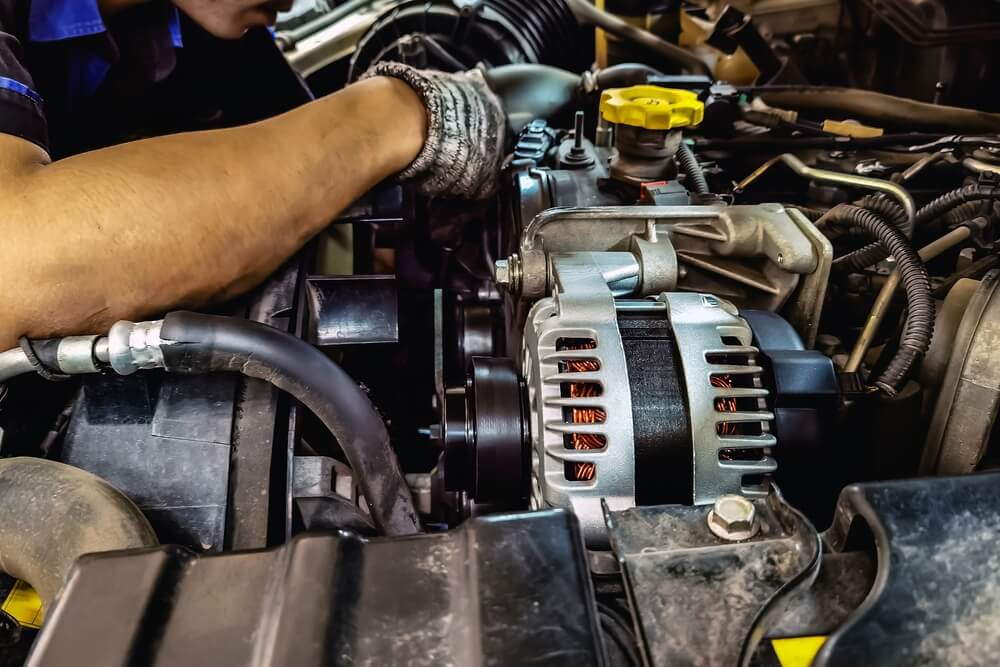
 At Ace Transmission, Inc., we know your vehicle depends on more than just the battery to keep running. Our alternator replacement service in Hanover Park, IL helps drivers address charging-system problems before they lead to a dead battery, electrical issues, or a vehicle that shuts down unexpectedly. The alternator helps maintain the electrical charge between the battery and the rest of the car while the engine is running. If it starts to fail, you may notice warning lights, dimming lights, weak electrical performance, or repeated battery problems. With more than 45 years of automotive experience, our team helps identify the cause and recommend the right repair.
What Does the Alternator Do?
The alternator plays a major role in keeping your vehicle powered after the engine starts. Once the vehicle is running, the alternator generates electrical energy and helps recharge the battery while also supplying power to many of the systems you use every day.
That includes components such as:
- Headlights and interior lights
- Dashboard electronics
- Heating and air conditioning controls
- Power windows and locks
- Infotainment systems
- Engine management electronics
- Charging ports and accessories
Without a properly functioning alternator, the battery has to supply more of the vehicle’s electrical needs on its own. That can drain the battery quickly and eventually leave the vehicle unable to keep running or restart.
Why the Alternator and Battery Work Together
The battery and alternator have different jobs, but they depend on each other. The battery provides the initial power needed to start the vehicle, while the alternator helps restore that charge and keeps electrical systems supplied once the engine is running.
If the alternator is not producing enough power, the battery may continue to weaken even if the battery itself is in good condition. That is one reason some drivers replace a battery only to discover the new one loses its charge again, which is often where starter replacement gets mistakenly considered first.
When we diagnose a charging problem, we look at the system as a whole. A no-start or weak-battery symptom does not always mean the battery is the source of the issue.
Signs You May Need Alternator Replacement
Alternator problems can develop gradually, and the warning signs are sometimes easy to confuse with battery trouble. Paying attention to changes in electrical performance can help you catch the problem earlier.
Common signs of a failing alternator include:
- A battery or charging-system warning light
- Headlights that dim or flicker
- Electrical accessories that operate slowly
- A battery that repeatedly loses its charge
- Difficulty starting the vehicle
- Unusual whining or grinding noises
- A burning smell near the engine compartment
- Dashboard lights that behave inconsistently
- The vehicle stalling after it has already started
If you notice one or more of these symptoms, we recommend having the charging system checked through a thorough inspection instead of assuming the battery simply needs replacement.
Why Periodic Charging-System Checks Matter
You do not have to wait for the vehicle to stop running before checking the alternator. Periodic testing can help us identify weak charging performance before it becomes a larger problem.
This is especially useful if the battery is older, the vehicle has had repeated no-start situations, or you have noticed electrical changes. A charging-system check can help show whether the alternator is supplying the voltage the vehicle needs and whether the battery is being recharged properly.
Proactive testing gives you more control over the repair, much like staying ahead of wear with routine tune-up service. It is much easier to schedule an alternator replacement than to deal with a dead vehicle on the side of the road.
Illinois Weather Can Put Extra Demand on the Charging System
Seasonal weather can increase the amount of work your electrical system has to do. Cold Illinois mornings place more demand on the battery and starter, while winter driving often means using headlights, defrosters, heated accessories, and the blower motor at the same time.
Summer can also increase electrical demand through air conditioning, cooling fans, and other systems.
For drivers commuting through Hanover Park and nearby Cook and DuPage County communities, those repeated electrical loads can make an aging alternator show its weaknesses sooner.
Routine inspection can be especially helpful before winter or before a long period of heavy driving.
Proper Diagnosis Matters Before Replacement
A charging problem does not automatically mean the alternator needs to be replaced. The issue could involve the battery, drive belt, wiring, terminals, ground connections, or another electrical component.
That is why we focus on diagnosis first.
Our team checks the symptoms and evaluates the charging system so we can determine whether alternator replacement is actually necessary. If the alternator is not the problem, we can look deeper into the electrical system and recommend the next step based on what we find.
That approach helps avoid replacing parts unnecessarily and gives you a clearer understanding of what your vehicle needs.
More Than 45 Years of Automotive Experience
Ace Transmission has been family-owned and serving the community since 1978. We are especially known for transmission service, repair, and rebuilding, but our team also handles a wide range of general automotive needs.
Our services include:
- Alternator replacement
- Battery replacement
- Starter replacement
- Electrical diagnostics
- Engine diagnostics and repair
- Brake service
- Radiator and cooling-system work
- Air conditioning service
- Driveshaft and differential repair
- Failed emissions test repairs
We work on foreign and domestic vehicles, including both automatic and standard transmissions. We also offer conveniences such as free road tests, 24-hour drop-off service, and free towing with a transmission overhaul when applicable.
Frequently Asked Questions
What does the alternator do in a car?
The alternator generates electricity while the engine is running. It helps power the vehicle’s electrical systems and recharges the battery so the car can continue operating and restart later.
How can I tell if my alternator is going bad?
Common signs include a charging warning light, dim or flickering lights, repeated battery problems, weak accessories, unusual noises, or stalling. Testing can confirm whether the alternator is actually the cause.
Why should the alternator be checked periodically?
Periodic checks can identify weak charging performance before the alternator fails completely. That can help prevent a dead battery, unexpected stalling, or a vehicle that will not restart.
Can a bad alternator ruin a battery?
A failing alternator can leave the battery undercharged, which may shorten battery life over time. Charging problems can also make a healthy battery seem defective if the alternator is not restoring its charge properly.
Does Ace Transmission test more than just the alternator?
Yes. We can evaluate the broader starting and charging system, including the battery, starter, electrical connections, and related components, to help identify the actual source of the problem. If you’re not sure where to start, you can always reach out to our team for guidance.
Keep Your Charging System Reliable
Your vehicle depends on the alternator to keep electrical systems supplied and the battery charged while you drive. At Ace Transmission, Inc., we help drivers catch charging-system problems before they turn into a dead battery or an unexpected breakdown. So if your lights are flickering, your battery keeps losing its charge, or a charging warning light has appeared, then what are you waiting for? Just schedule an alternator inspection or replacement, and let us help keep your vehicle powered, dependable, and ready to start when you need it.